
Undergraduate Common Entrance Examination for Design
UCEED 2027
UCEED Exam Full Details
UCEED Exam Full Details




UCEED 2027 at a Glance
The Undergraduate Common Entrance Exam for Design (UCEED) is a prestigious national-level entrance exam conducted by the Indian Institute of Technology (IIT) Bombay, serving as the gateway to Bachelor of Design (B.Des) programs at premier institutes like IIT Bombay, IIT Delhi, IIT Guwahati, IIT Hyderabad, IIT Indore, IIT Roorkee, and IIITDM Jabalpur. Renowned for its rigorous evaluation of creativity, problem-solving, and design aptitude, UCEED 2026 is a critical step for aspirants aiming to build a career in design disciplines such as product design, user experience (UX/UI), and visual communication.
This guide is your complete roadmap to cracking UCEED 2027. Whether you’re a Class 12th student wondering if your science background is enough (spoiler: it absolutely is), or a graduate student looking to pivot into design, we’ve got every detail covered.
What is UCEED? Understanding the Undergraduate Common Entrance Examination for Design
UCEED stands for Undergraduate Common Entrance Examination for Design. It’s conducted by IIT Bombay on behalf of all participating institutes, and it’s the sole entrance exam for admission to the Bachelor of Design (B.Des) program at India’s top technical institutes.

Why UCEED Matters
Who Conducts UCEED?
IIT Bombay is the organizing institute. They set the paper, evaluate Part B (the drawing section), release results, and coordinate the entire admission process. The official website for all updates is uceed.iitb.ac.in
UCEED 2027 Highlights
| Feature | Details |
|---|---|
| Exam Name | Undergraduate Common Entrance Exam for Design (UCEED) |
| Conducting Body | Indian Institute of Technology (IIT) Bombay |
| Programs Offered | Bachelor of Design (B.Des) |
| Exam Stages | Part A (Computer-Based Test) and Part B (Drawing Test) |
| Mode of Exam | Part A (Online), Part B (Pen-and-Paper) |
| Total Seats | Approximately 250–300 across participating IITs |
| Exam Frequency | Once a year (typically in January) |
| Total Marks | 300 (Part A: 240 marks, Part B: 60 marks) |
| Official Website | uceed.iitb.ac.in |
UCEED 2027 Exam Date & Important Dates
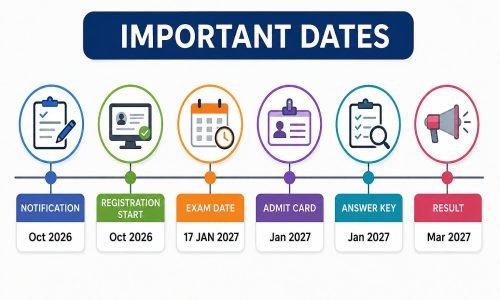
Official UCEED 2027 Schedule
| Event | Date |
|---|---|
| Official Notification Release | October 1, 2026 |
| Online Registration Opens | October 2026 |
| Last Date to Apply (Regular Fee) | ~November 5, 2026 |
| Last Date to Apply (Late Fee) | ~November 10, 2026 |
| Admit Card Release | ~January 2, 2027 |
| Last Date for Admit Card Discrepancy | ~January 8, 2027 |
| UCEED 2027 Exam Date | January 17, 2027 (Sunday) |
| Draft Answer Key Release | ~January 20, 2027 |
| Last Date for Objections | ~January 22, 2027 |
| Final Answer Key Release | ~January 28, 2027 |
| Part A Cut-off Marks Announcement | ~February 2027 |
| UCEED 2027 Result Declaration | ~March 2027 |
| Scorecard Download Begins | ~March 2027 |
| Last Date to Download Scorecard | ~July 2027 |
| B.Des Application Process | March 2027 |
| Seat Allotment Round 1 | April 2027 |
| Seat Allotment Round 2 | May 2027 |
| Seat Allotment Round 3 | July 2027 |
- The admission notification will be released on October 1, 2026, on the official portal uceed.iitb.ac.in
UCEED vs NID vs NIFT
| Feature | UCEED | NID | NIFT |
|---|---|---|---|
| Conducting Body | IIT Bombay | NID (Ministry of Commerce) | NIFT (Ministry of Textiles) |
| Programs Offered | B.Des | B.Des, M.Des | B.Des, B.FTech, M.Des, MFM |
| Participating Institutes | IITs, IIITDM Jabalpur, score-sharing institutes | NID campuses only | NIFT campuses only |
| Exam Focus | Visual perception, logical reasoning, creativity, drawing | Design aptitude, creativity, material handling | Design aptitude, general ability, situation test |
| Exam Mode | Part A: CBT; Part B: Pen & Paper | Prelims: Offline; Mains: Studio Test | CAT: Offline; GAT: Online |
UCEED 2027 Eligibility Criteria
For B.Des Admission
- You must have passed or be appearing for the Class 12 (or equivalent) examination in 2026 or 2027.
Any stream is acceptable — Science, Commerce, Arts, or Humanities. Yes, you read that right. A commerce student has the same chance as a science student at IIT Bombay’s B.Des program
- There is no age limit to appear for UCEED.
- You can attempt UCEED a maximum of two times in consecutive years.
- So if you appeared for UCEED 2026, you can appear for UCEED 2027. But if you skip 2027 and want to appear in 2028, that’s not allowed (since 2026 and 2028 are not consecutive).
If you’re appearing for the first time in 2027, you can also appear in 2028 if needed
Important Note: Qualifying UCEED and getting a rank does NOT guarantee admission. You must separately apply to the B.Des programs at participating institutes and go through their counselling process. Your UCEED score is valid for one year only
Participating Institutes & Their Specific Eligibility
| Institute | Program | Seat Intake (Approx.) |
|---|---|---|
| IIT Bombay | B.Des | 30 |
| IIT Delhi | B.Des | 20 |
| IIT Guwahati | B.Des | 45 |
| IIT Hyderabad | B.Des | 20 |
| IIITDM Jabalpur | B.Des | 66 |
UCEED 2027 Registration Guide
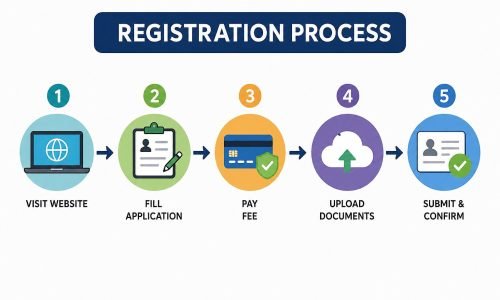
Step-by-Step Registration Process
- Visit the Official Website: Go to uceed.iitb.ac.in
- Click on “Registration”: Create an account using your email ID and mobile number.
- Fill the Application Form:
- Personal details (name, date of birth, gender, category)
- Academic details (Class 10 and 12 board, roll number)
- Address and communication details
- Choice of exam city (select multiple preferences)
- Upload Documents:
- Recent passport-size photograph
- Scanned signature
- Class 10 mark sheet/certificate
- Class 12 mark sheet (if available)
- Category certificate (if applicable)
- PwD certificate (if applicable)
- General/OBC (Male): ~₹3,000
- General/OBC (Female): ~₹1,500
- SC/ST/PwD: ~₹1,500
Late fee: Additional ₹500 if applying after the regular deadline
6. Print Confirmation Page: Always keep a copy.
Important Registration Tips
- Apply early. Don’t wait for November 5. The server can crash.
- Choose exam city wisely. UCEED is conducted in ~27 cities across India.
- Double-check everything before submitting. The correction window is limited.
- Use a permanent email ID. All updates, admit cards, and results are sent here.
| Stage | Details |
|---|---|
| Registration |
|
| Fill the Application Form |
(if applicable) |
| Upload Documents |
|
| Pay the Application Fee |
|
| Submit & Download |
|
| Important Tips |
|
UCEED 2027 Exam Pattern: Part A & Part B Explained
Overview
| Particulars | Details |
|---|---|
| Total Duration | 3 hours |
| Total Marks | 300 |
| Medium | English only |
| Part A | Computer-Based Test (CBT) — 2 hours, 200 marks |
| Part B | Pen-and-Paper — 1 hour, 100 marks |
Part A: Computer-Based Test (200 Marks, 2 Hours)
Part A is where your analytical brain shines. It’s conducted on a computer and consists of 57 questions across three sections
Section 1: Numerical Answer Type (NAT)
- Questions: 14
- Marks: +4 for correct answer
- Negative Marking: None
- Format: You enter a numerical answer using a virtual keyboard. No options are given.
Section 2: Multiple Select Questions (MSQ)
- Questions: 15
- Marks: Partial marking (see below)
- Negative Marking: -1 for incorrect answers
- Format: Each question has 4 options. One or more options may be correct.
- +4 marks: If you select ALL correct options and NO incorrect options.
- +3 marks: If all 4 options are correct but you select only 3 correct ones.
- +2 marks: If 3+ options are correct but you select only 2 correct ones.
- +1 mark: If 2+ options are correct but you select only 1 correct one.
- 0 marks: If you don’t attempt the question.
- -1 mark: In ALL other cases (including selecting even one wrong option)
Section 3: Multiple Choice Questions (MCQ)
- Questions: 28
- Marks: +3 for correct answer
- Negative Marking: -0.71 for incorrect answers
- Format: Standard single-correct MCQs.
Part A Total: 14 + 15 + 28 = 57 questions = 200 marks
Part B: Pen-and-Paper Test (100 Marks, 1 Hour)
Part B is where your creative soul takes over. This section is evaluated manually by design faculty and consists of 2 questions
| Question | Type | Marks |
|---|---|---|
| Question 1 | Sketching-based | 50 |
| Question 2 | Design Aptitude-based | 50 |
| Total | 100 |
- The questions are displayed on the computer screen, but you write/draw your answers in an answer booklet provided by the invigilator.
- No negative marking in Part B.
- Part B answer booklets are collected at the end of the exam.
- For PwD candidates using a scribe, assistance in Part B is not permitted since it evaluates drawing skills
Important Exam Rules
- Part A and Part B are time-bound. You get 2 hours for Part A and 1 hour for Part B. You cannot use Part B time for Part A or vice versa.
- Part B is mandatory. Even if you ace Part A, your Part B booklet won’t be evaluated if you don’t qualify Part A.
- Part A has a cutoff. IIT Bombay announces a minimum cutoff score for Part A. Only candidates scoring above this cutoff have their Part B evaluated
- No review or re-evaluation. UCEED does not entertain requests for re-totaling or re-evaluation of either Part A or Part B
| Part | Details |
|---|---|
| Part A | Computer-Based Test (CBT) – 240 Marks, 2.5 Hours |
| Mode | Online |
| Question Types |
|
| Sections | – Visualization and Spatial Reasoning – Observation and Design Sensitivity – Environmental and Social Awareness – Analytical and Logical Reasoning – Language and Creativity – Practical and Scientific Knowledge |
| Purpose | Tests analytical thinking, logic, observation, and design aptitude |
| Part | Details |
|---|---|
| Part B | Drawing Test – 60 Marks, 30 Minutes |
| Mode | Pen-and-paper |
| Question Type | One sketching-based question |
| Purpose | Evaluates drawing skills, visual sensitivity, perspective, creativity, and proportions |
| Evaluation | Manually graded by expert evaluators based on holistic artistic and conceptual criteria |
| Additional Key Points | Details |
|---|---|
| Total Marks | 300 (Part A: 240 + Part B: 60) |
| Part B Evaluation | Checked only if candidate clears Part A cut-off |
| Re-evaluation Policy | No re-evaluation/re-checking for Part A; Part B is manually assessed |
| Medium of Exam | English only |
| Exam Cities | Conducted in 24 cities across India |
UCEED 2027 Syllabus: Complete Breakdown
Part A Syllabus
1. Visualization and Spatial Ability
- 2D and 3D shapes and their transformations
- Rotation and reflection of objects
- Orthographic projections (top, front, side views)
- Isometric views
- Counting surfaces, edges, and vertices
- Paper folding and cutting
- Mirror images and water images
- Shadow projections
- Spatial reasoning puzzles
2. Observation and Design Sensitivity
- Identifying hidden shapes and patterns
- Spotting differences between similar images
- Understanding design elements (line, shape, form, texture, color)
- Aesthetic sensitivity and visual composition
- Understanding of proportion, balance, and harmony
3. Environmental and Social Awareness
- General awareness of environmental factors (climate, population, water, vegetation, pollution, weather, natural resources)
- Implications of quality of products and infrastructure
- History of art, sculpture, and literature
- Famous designers and their works
- Social and cultural awareness
- Current affairs related to design and technology
4. Analytical and Logical Reasoning
- Logical deduction and inference
- Pattern recognition (number, letter, and visual patterns)
- Series completion
- Coding-decoding
- Blood relations
- Direction sense
- Syllogisms
- Data interpretation (basic graphs and charts)
5. Language and Creativity
- Reading comprehension
- English grammar and vocabulary
- Verbal reasoning
- Creative thinking exercises
- Lateral thinking puzzles
- Story completion and ideation
Part B Syllabus
1. Drawing
- Freehand sketching of objects, people, and scenes
- Proportion and perspective
- Line quality and composition
- Shading and rendering techniques
- Expressive drawing
2. Design Aptitude
- Practical and appropriate responses to design problems
- Ingenuity and empathy in problem-solving
- Product design thinking
- User-centered design approach
Innovation and originality
| Section | Details |
|---|---|
| Part A | Objective Section: Includes NAT (Numerical Answer Type), MSQ (Multiple Select Questions), and MCQ (Multiple Choice Questions) |
| Part B | Subjective Section: Evaluates drawing and design aptitude |
Part A Syllabus (200 Marks)
| Topic | Description |
|---|---|
| Visualization and Spatial Ability | – Understanding 2D/3D shapes – Transformations and spatial relationships – Basic mechanical and scientific concepts |
| Observation and Design Sensitivity | – Detecting subtle differences in visual details – Aesthetic judgment and attention to detail |
| Environmental and Social Awareness | – Knowledge of environmental issues, cultural and societal trends – Concepts like sustainability and urbanization |
| Analytical and Logical Reasoning | – Pattern recognition, data interpretation – Logical and analytical problem solving (qualitative & quantitative) |
| Language and Creativity | – Reading comprehension and verbal reasoning – Creative and expressive thinking |
| Practical and Scientific Knowledge | – Applying scientific principles in real-world or design-related scenarios |
Part B Syllabus (100 Marks)
| Topic | Description |
|---|---|
| Drawing | – Sketching scenes, objects, or people – Emphasis on proportions, perspective, and shading |
| Design Aptitude | – Creative problem solving in design contexts – Innovation and ideation |
Important Note
| Condition | Details |
|---|---|
| Evaluation of Part B | Evaluated only for candidates who qualify Part A based on cutoff scores |
How to Prepare for UCEED 2027: A Practical Strategy
The 8-Month Preparation Timeline
Months 1-2 (May – June 2026): Foundation Building
- Start solving basic visualization puzzles daily. Books like “Brain Teasers” and spatial reasoning apps help.
- Practice 10-15 numerical problems daily (geometry, counting, patterns).
- Read about design history, famous designers, and current design trends.
- Sketch daily for 30 minutes. Start with basic shapes, then objects, then scenes.
- Practice perspective drawing (one-point and two-point).
- Work on human figure proportions.
Months 3-5 (July – September 2026): Skill Development
- Move to UCEED-level problems. Solve previous year NAT and MSQ questions.
- Practice MSQs carefully — they’re the trickiest section.
- Build a GK notebook for environmental and social awareness.
- Practice timed sketching (15-minute sketches, 30-minute sketches).
- Work on design aptitude questions: “Design a product for elderly people” or “Redesign a public bus stop.”
- Learn to annotate your sketches. Labels and explanations matter.
Months 6-7 (October – November 2026): Intensive Practice
- Solve full-length Part A papers in 2 hours.
- Focus on accuracy. Remember: -1 and -0.71 penalties hurt.
- Revise weak topics.
- Solve previous year Part B questions under timed conditions.
- Get your sketches reviewed by mentors or online communities.
- Practice both sketching and design aptitude questions.
Month 8 (December 2026): Final Stretch
- Solve full-length papers (Part A + Part B) every 3-4 days.
- Revise formulas, concepts, and GK notes.
- Stay healthy. Don’t burn out before January 17.
Subject-Wise Strategy
- Practice mental math. You won’t have a calculator.
- Focus on geometry — area, volume, surface area of complex shapes.
- Counting problems (faces, edges, vertices of combined solids) appear frequently.
- No negative marking means you MUST attempt every NAT question.
- Read every option carefully. MSQs are designed to trick you.
- If you’re unsure about even one option, skip the question. A -1 penalty is brutal.
- Practice from previous year papers to understand the “traps.”
- Standard single-correct questions. Manageable if your concepts are clear.
- -0.71 negative marking means you should attempt only if you’re reasonably sure.
- Carry your sketchbook everywhere. Sketch what you see.
- Study product designs around you — why is a chair shaped that way? Why are traffic signs designed the way they are?
- Practice explaining your design decisions. In the exam, you may need to write brief explanations.
Daily Study Schedule (Sample)
| Time Slot | Activity |
|---|---|
| 6:00 – 7:00 AM | Observation sketching |
| 9:00 – 10:30 AM | Part A practice (NAT/MSQ/MCQ rotation) |
| 4:00 – 5:30 PM | Part B practice (sketching/design problems) |
| 6:00 – 7:00 PM | GK and design awareness reading |
| 8:00 – 9:00 PM | Mock test or previous year paper |
The UCEED Mindset
- Part A cutoff is real. If you don’t clear the Part A cutoff, your Part B booklet won’t even be opened. Don’t neglect Part A in favor of sketching.
- Accuracy > Speed in Part A. With negative marking, unattempted is often better than wrong.
- Originality > Perfection in Part B. A unique idea with rough execution beats a generic idea with perfect shading.
Best Books for UCEED 2027
For Part A
| Book | Author/Publisher | Why It’s Useful |
|---|---|---|
| UCEED Entrance Exam Guide | Arihant / Disha | Comprehensive overview of exam pattern |
| Verbal and Non-Verbal Reasoning | R.S. Aggarwal | Logical reasoning and pattern recognition |
| Quantitative Aptitude | R.S. Aggarwal | Basic math for NAT section |
| Brain Teasers | Various | Lateral thinking and creative problem-solving |
| Previous Year UCEED Papers | IIT Bombay / Coaching Institutes | Most important resource |
For Part B
| Book | Author/Publisher | Why It’s Useful |
|---|---|---|
| Design Drawing | Francis D.K. Ching | Design visualization and drawing techniques |
| Perspective Drawing Handbook | Joseph D’Amelio | Mastering perspective |
| Drawing Scenery | Jack Hamm | Environment and memory drawing |
| Rendering with Pen and Ink | Robert W. Gill | Line work and expressive drawing |
| Basic Visual Concepts And Principles | Charles Wallschlaeger | Design theory fundamentals |
Online Resources
- Official UCEED website (uceed.iitb.ac.in): Previous year question papers and answer keys
- YouTube channels: Design aspirant communities, UCEED paper solutions
- Coaching material: BRDS, Pahal Design, AFA, SILICA (if enrolled)
UCEED Previous Year Question Papers
Why PYQs Are Non-Negotiable
- Pattern Familiarity: You’ll understand the exact difficulty level and question types.
- Time Management: 2 hours for Part A and 1 hour for Part B is tight. PYQs teach you pacing.
- MSQ Mastery: MSQs are unique to UCEED. Only PYQs can teach you how to approach them.
- Part B Calibration: You’ll understand what kind of sketches and design solutions score well.
Which Papers to Solve?
| Year | Importance |
|---|---|
| UCEED 2026 | Most recent pattern (Part B has 2 questions now) |
| UCEED 2025 | Recent pattern |
| UCEED 2024 | Established current pattern |
| UCEED 2023 | Good for practice |
| UCEED 2022 | Useful for topic distribution |
| UCEED 2015-2021 | Core concepts haven’t changed |
Where to Find UCEED PYQs
- Official website: uceed.iitb.ac.in releases official question papers and answer keys
- Coaching institutes: BRDS, Pahal Design, AFA provide compiled PDFs
- Online forums: Reddit, Telegram groups, Discord servers for design aspirants
How to Use PYQs Effectively
- Solve topic-wise first. After studying a topic, solve all related PYQs.
- Then solve full papers. Take them in timed, exam-like conditions.
- For Part B, get feedback. Show your sketches to mentors or upload to design communities.
- Analyze MSQ mistakes. Understand why you selected wrong options.
UCEED Admit Card 2027
When and Where to Download
- Expected Release: ~January 2, 2027
- Official Website: Visit uceed.iitb.ac.in
- Login Required: Use your registered email ID and password
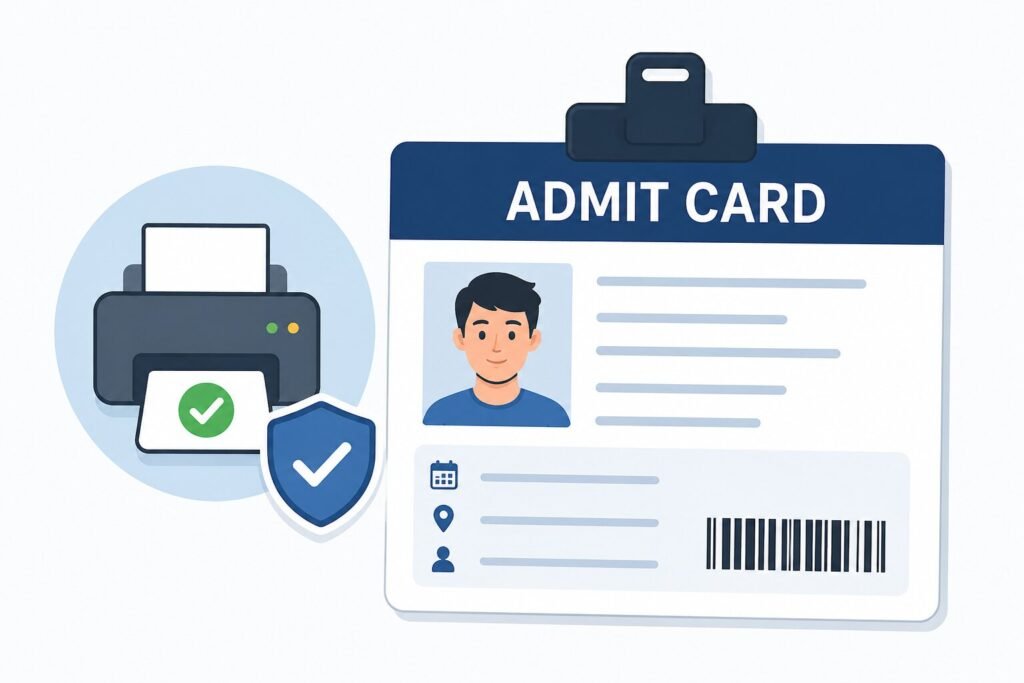
Details on the Admit Card
- Candidate name and photograph
- Roll number and application number
- Exam date, time, and reporting time
- Exam center address
- Important instructions
Documents to Carry on Exam Day
- Printed UCEED admit card 2027
- Valid photo ID (Aadhaar, PAN, Passport, Driving License, School ID with photo)
- Passport-size photograph (same as uploaded during registration)
- Drawing materials: Pencils, erasers, sharpeners, color pencils, markers (check official guidelines for allowed materials)
What NOT to Carry
- Mobile phones, smartwatches, calculators, or any electronic devices
- Any study material or paper
- Eatables (usually not allowed inside)
UCEED Career Scope
The UCEED Career Scope is vast, with design becoming integral to industries like technology, automotive, fashion, and media. Graduates from B.Des programs can explore diverse roles, including:
- Product Designer: Designing consumer goods like electronics or furniture.
- UX/UI Designer: Creating user-friendly digital interfaces.
- Graphic Designer: Crafting visual content for branding and marketing.
- Interaction Designer: Enhancing user experiences in digital products.
- Animation Designer: Working in gaming, film, or advertising.
- Sustainable Designer: Focusing on eco-friendly design solutions.
- Visual Merchandiser: Designing retail displays to attract customers.
Industry Demand
- Salary Range: Freshers can earn INR 4–8 LPA, while experienced designers may earn INR 12–25 LPA or more.
- Emerging Fields: Virtual reality, augmented reality, and sustainable design are gaining traction.
- Top Employers: Companies like Apple, Google, Tata Elxsi, and Mahindra hire design graduates.
Higher Education
B.Des graduates can pursue M.Des, MBA, or specialized courses abroad to further enhance their career prospects.
UCEED Result 2027
Expected Result Timeline
- Draft Answer Key: ~January 20, 2027
- Objection Window: ~January 20-22, 2027
- Final Answer Key: ~January 28, 2027
- Part A Cut-off Announcement: ~February 2027
- Result Declaration: ~March 2027
Scorecard Download: ~March to July 2027
How to Check UCEED 2027 Result
- Visit uceed.iitb.ac.in
- Click on “UCEED 2027 Result”
- Log in with your registered email ID and password
- Download and print your scorecard

What’s in the Scorecard?
- Part A marks
- Part B marks (if qualified)
- Total marks
- All India Rank (AIR)
- Category rank (if applicable)
Understanding the Rank List
- All candidates who clear the Part A cutoff and have their Part B evaluated receive a rank.
- The rank list is prepared based on total marks (Part A + Part B).
- Ties are broken using Part B marks, then Part A marks, then age.
UCEED 2027 Participating Institutes & Seat Matrix
IITs Offering B.Des Through UCEED
| Institute | Location | Approx. Seats |
|---|---|---|
| IIT Bombay | Mumbai, Maharashtra | ~30 |
| IIT Delhi | New Delhi | ~20 |
| IIT Guwahati | Guwahati, Assam | ~45 |
| IIT Hyderabad | Hyderabad, Telangana | ~20 |
| IIT Roorkee | Roorkee, Uttarakhand | Varies |
IIITDM Jabalpur
| Institute | Location | Approx. Seats |
|---|---|---|
| IIITDM Jabalpur | Jabalpur, Madhya Pradesh | ~66 |
Score-Sharing Institutes
- Other IIITs
- State design institutes
- Private universities
UCEED Counselling & Seat Allotment
The Admission Process
- B.Des Application: After results, you must fill a separate application form for B.Des admission at participating institutes (typically March 2027).
- Choice Filling: Select your preferred institutes and categories.
- Seat Allotment: IIT Bombay conducts multiple rounds of seat allotment based on your rank, category, and preferences.
- Seat Acceptance: If allotted a seat, pay the acceptance fee and confirm.
- Document Verification: Upload/verify original documents.
- Final Admission: Pay the remaining fees and join the institute.
Seat Allotment Rounds
- Round 1: April 2027
- Round 2: May 2027
- Round 3: July 2027
Frequently Asked Questions
A: UCEED 2027 will be held on January 17, 2027 (Sunday). The official notification will be released on October 1, 2026, on uceed.iitb.ac.in
A: Registration is expected to open in October 2026, shortly after the notification release on October 1, 2026
A: UCEED has two parts. Part A is a 2-hour computer-based test with 57 questions (NAT, MSQ, MCQ) for 200 marks. Part B is a 1-hour pen-and-paper test with 2 questions (sketching and design aptitude) for 100 marks. Total marks: 300
A: Yes, in Part A only. MSQs have -1 penalty for incorrect answers. MCQs have -0.71 penalty. NAT questions have no negative marking. Part B has no negative marking
A: You can attempt UCEED a maximum of two times in consecutive years. So if 2027 is your first attempt, you can also appear in 2028
Q7. Is there an age limit for UCEED 2027?
A: Absolutely! UCEED is stream-agnostic. Students from Science, Commerce, Arts, or any other stream can apply
Q9. What is the official website for UCEED 2027?
A: No. UCEED gives you a rank, but you must separately apply for B.Des admission at participating institutes. Admission depends on your rank, category, and seat availability
Q11. What is the Part A cutoff for UCEED?
Q12. What drawing materials should I carry for UCEED Part B?
Q13. Is coaching necessary for UCEED?